


Jericho (Ariha), Palestine: The Oldest City in the World
People have lived on the same low mound in the Jordan Valley for roughly eleven thousand years. That mound is Jericho, in Arabic أريحا, Ariha, and it is the oldest continuously inhabited city in the world. Long before the pyramids, before writing, before the wheel, families were already drawing water from a spring here and building walls of stone. To speak of Jericho, Palestine is to speak of the deepest layer of human settlement anywhere on earth, a city that has kept its place in the same oasis while empires rose and fell around it. It sits at the base of a heritage that runs through every part of Palestinian identity, from the land to the crafts carried out of it.
TL;DR
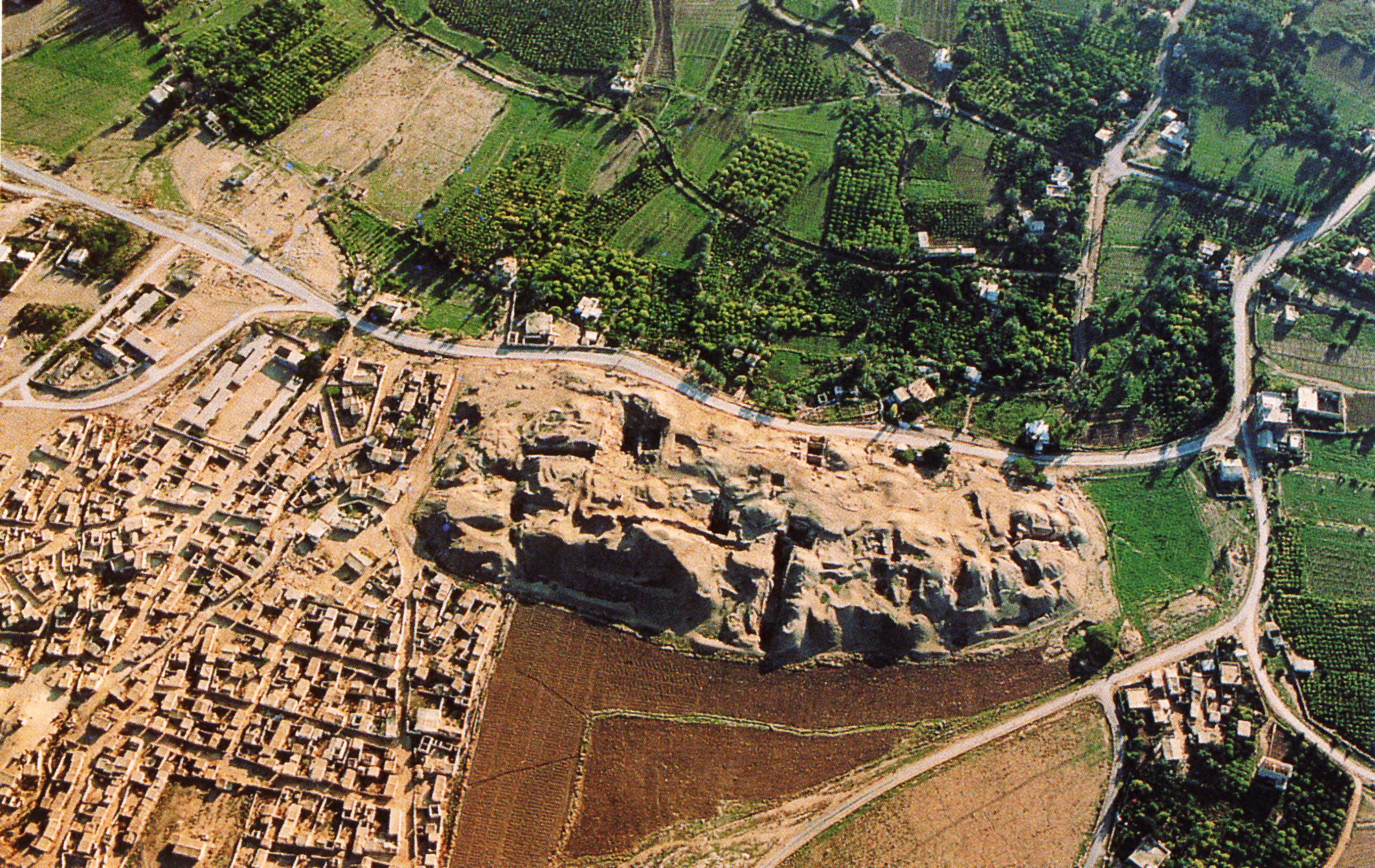
Jericho, in Arabic Ariha, is a Palestinian city in the West Bank, in the Jordan Valley north of the Dead Sea and more than 250 metres below sea level. Its ancient mound, Tell es-Sultan, holds the remains of settlements dating back to around the tenth millennium BCE, which makes Jericho the oldest continuously inhabited city in the world and home to one of the earliest known stone towers, built around 8000 BCE. The city exists because of a perennial spring, Ein es-Sultan, that turns the desert floor into an oasis of date palms and citrus. Nearby stands Hisham's Palace, an eighth-century Umayyad site famous for its Tree of Life mosaic. In 2023, UNESCO inscribed ancient Jericho on the World Heritage List as a site in the State of Palestine.
Where Is Jericho?
Jericho lies in the Jordan Valley, north of the Dead Sea, in the eastern West Bank. It sits more than 250 metres below sea level, which makes it one of the lowest permanently inhabited places on the planet. The heat is dry and heavy, the winters mild, and the surrounding hills bare and pale.
What breaks the desert is water. A spring rises at the edge of the old mound and feeds a green sprawl of orchards and fields, the reason a city could take root here in the first place. The Arabic name Ariha is often linked to an old Semitic root tied to the moon or to fragrance, a fitting name for an oasis that scents the valley with citrus. Like the port of Jaffa on the coast, Jericho is a place defined by what its ground can grow.
Why Is Jericho the Oldest City in the World?
The claim rests on Tell es-Sultan, the mound at the heart of the modern city. A tell is an artificial hill built up over millennia as each generation raised new homes on the rubble of the old. Excavations here, most famously those led by the archaeologist Kathleen Kenyon in the 1950s, cut down through those layers and reached settlement remains dating to roughly the tenth millennium BCE.
The earliest structures belong to hunter-gatherers of the Natufian culture, who settled near the spring before farming had even been invented. By around 8000 BCE, in the Pre-Pottery Neolithic period, the people of Jericho had built a massive stone wall and a round tower more than eight metres tall, among the oldest monumental structures ever found. This was a proto-city thousands of years before Sumer or Egypt. Jericho is not simply very old. It is a place where the idea of the city itself was being worked out for the first time. Its long continuity is matched only by cities such as Hebron, which sits among the world's other oldest inhabited places. In 2023, UNESCO inscribed the site as a World Heritage location in the State of Palestine, describing it as the oldest fortified city in the world.

The Spring of Ein es-Sultan
Every part of Jericho's story returns to the spring. Ein es-Sultan, known in older texts as Elisha's Fountain, has flowed at the foot of the mound without pause for as long as people have recorded it. In a valley where almost nothing grows on its own, a single reliable source of fresh water was the difference between wandering and staying.
That spring is why the oldest city sits exactly here and nowhere else. The Natufian hunters camped beside it. The Neolithic builders raised their tower next to it. Every later town simply settled again on the same green patch the water made possible. The oasis is not a backdrop to Jericho's history. It is the cause of it.
Hisham's Palace and the Tree of Life Mosaic
A short distance north of the old mound stand the ruins of Hisham's Palace, in Arabic Khirbat al-Mafjar. It was built between roughly 724 and 743 CE, during the Umayyad period, the first Islamic dynasty. The complex included a palace, a grand bath hall, a mosque, and an ornate fountain, all set within a walled estate.
Its most celebrated survival is a floor mosaic in the bath hall's reception room, known as the Tree of Life. It shows a leafy fruit tree with gazelles grazing peacefully on one side while a lion attacks a fourth gazelle on the other. Scholars have read it many ways, as an image of peace and war, or of rule and its costs. What is not in dispute is its craft: it is one of the finest early Islamic mosaics anywhere, and it has become an emblem of Jericho itself.

The Oasis: Dates, Palms, and Bananas
Jericho has been called the City of Palms since antiquity, and the name still fits. The warm, low valley and the constant water make it one of the most fertile pockets of the whole region. Date palms are the signature crop, their fruit sweet and prized, and the groves have shaped the local economy for thousands of years.
Alongside the dates grow bananas, citrus, and vegetables that thrive in the heat below sea level. This is agriculture as deep heritage, the same rootedness to land and harvest that runs through the story of the olive tree across the Palestinian hills. In Jericho the crop is different, but the bond is the same: a people and a piece of ground that have fed each other for longer than almost anywhere on earth.
The Winter Palaces and the Balsam of Ancient Jericho
Long before the Umayyads built Hisham's Palace, Jericho's warmth and water drew rulers to winter here. At Tulul Abu al-Alayiq, on the edge of the oasis, lie the remains of the Hasmonean and later Herodian winter palaces, a sprawl of courtyards, pools, and bath houses raised in the last two centuries BCE. Kings left the cold hills of Jerusalem for this valley the way ordinary families still do.
What made the oasis truly famous, though, was a plant. The Jericho groves grew balsam, an aromatic resin the ancient world knew as opobalsamum and prized as the costliest perfume on earth. The Greek geographer Strabo described a balsam park growing beside the royal palace at Jericho. Mark Antony is said to have handed these groves to Cleopatra, and after her death Herod leased them back. For a few centuries a small orchard in the Jericho oasis scented the courts of Rome.
Jericho in the West Bank Today
Modern Jericho is a Palestinian city in Area A of the West Bank, under Palestinian civil and security control. It is small, quiet, and warm through the winter, which has long made it a retreat for people escaping the cold of the higher cities. Its ancient sites, Tell es-Sultan and Hisham's Palace, anchor a growing cultural tourism trail that local families hope will strengthen the economy.
That future is not guaranteed. Across the wider Jordan Valley, Palestinian communities face pressure on land, water, and movement, and heritage sites sit inside a contested landscape. The oldest city in the world is also a living Palestinian town working to hold onto its ground. It shares that quiet steadfastness with older coastal cities like Akka and craft towns like Nablus, each keeping its history alive in the present tense.

Frequently Asked Questions
Is Jericho the oldest city in the world?
Yes. Jericho is widely regarded as the oldest continuously inhabited city in the world. Its ancient mound, Tell es-Sultan, holds settlement remains dating to around the tenth millennium BCE, and UNESCO described the site in 2023 as the oldest fortified city in the world.
Is Jericho in Palestine?
Yes. Jericho, known in Arabic as Ariha, is a Palestinian city in the eastern West Bank, in Area A under Palestinian control. UNESCO inscribed ancient Jericho on the World Heritage List in 2023 as a site in the State of Palestine.
What is Jericho famous for?
Jericho is famous for being the oldest continuously inhabited city on earth, for the ancient mound of Tell es-Sultan and its Neolithic tower, for the spring of Ein es-Sultan that feeds its oasis, and for Hisham's Palace with its eighth-century Tree of Life mosaic.
Where is Jericho located?
Jericho sits in the Jordan Valley in the eastern West Bank, north of the Dead Sea and more than 250 metres below sea level, which makes it one of the lowest cities on earth. Palestinians call it Ariha.
How old is Jericho?
Settlement at Jericho stretches back roughly eleven thousand years, to around the tenth millennium BCE. A monumental stone tower built there around 8000 BCE is among the oldest such structures ever discovered.
What is Ariha?
Ariha is the Arabic name for Jericho. It is the name Palestinians use for the city today, and it appears on road signs and maps across the West Bank.
A City That Keeps Its Age
Jericho is not just an old city; it is the oldest record of the choice to stay. For eleven thousand years, people have looked at one spring, one green patch in a hard valley, and decided to build again on the same ground. That is the quiet argument the tell keeps making, layer on layer: that a place can hold a people, and a people can hold a place, across a span of time almost too long to imagine.
This article was written and fact-checked for FALASTIN by Jad Sahyoun, with the assistance of AI tools.
At FALASTIN, we aim to keep that heritage alive through our Palestinian clothing collection.
100% of profits from FALASTIN are donated to the United Palestinian Appeal.