


How to Wear a Keffiyeh: 6 Ways Rooted in Palestinian Tradition
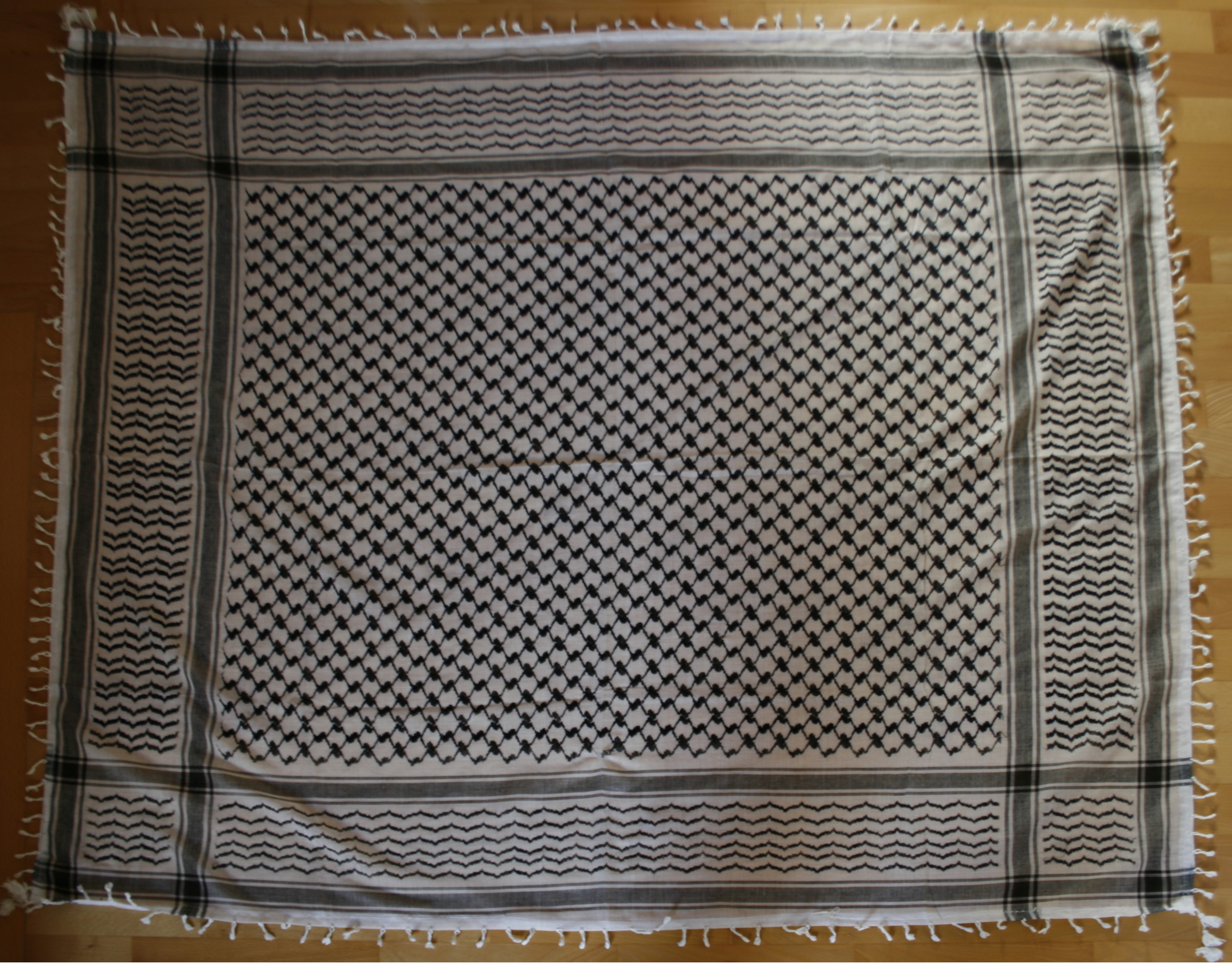
In Arabic it is the keffiyeh (كوفية), and for generations of Palestinian farmers it was simply what a man wore on his head before he stepped into the sun. It kept the heat off in summer and the cold off in winter. It was not a statement. It was a tool, woven from cotton, folded by hand, and worn the same way a grandfather had worn it. Knowing how to wear a keffiyeh, then, is less a question of style than of reading a piece of Palestinian heritage apparel the way it was meant to be read.
This guide covers six traditional ways the cloth is worn, what the headwrap and the cord around it actually mean, and how to wear it with the respect a heritage object asks for. For where the keffiyeh comes from, the pattern's origins, and the last loom still weaving it, see the full history of the keffiyeh and the Hirbawi loom.
TL;DR
The keffiyeh is worn in six traditional ways: as a head wrap held by the agal cord, as a head wrap tucked without the cord, as a face-and-neck cover against sun and dust, draped flat over the shoulders, looped around the neck like a scarf, or folded as a shawl. The square cloth is first folded corner-to-corner into a triangle. The black-and-white version is the one most tied to Palestinian identity. Wearing it respectfully means wearing it as heritage, not costume: knowing what the pattern carries, and where an authentic, hand-loomed one comes from.
What Is a Keffiyeh, and Why Does It Matter Who Wears It?
A keffiyeh is a square scarf of woven cotton, usually around 110 to 130 centimetres on each side, patterned in a single colour against a pale ground. The Palestinian version is the black-and-white one. Its woven motifs are often read as a fishnet, the trade roads that crossed the land, and the leaves of the olive tree, which is the same grammar of land and memory that runs through the language of Palestinian embroidery.
It matters because the cloth carries history. During the 1936 revolt against British rule, the headdress of the village fellah (فلاح), the peasant farmer, became a shared sign of belonging worn across class lines. That is why how a keffiyeh is worn, and by whom, is read closely. The same square of cotton is documented across the wider region under names like the shemagh and ghutra, but the black-and-white Palestinian keffiyeh holds a meaning the others do not.
Before the Wrap: The Cloth, the Agal, and the Fold

Most traditional ways begin the same way. The square is folded once, corner to corner, into a triangle, with the long folded edge at the top and the point hanging down. From there the method changes depending on whether the cloth is going on the head, the face, or the shoulders.
The headwrap is often held in place by the agal (عقال), a doubled black cord that sits as a ring on top of the head. In its older village use the agal was practical rope, the kind used to hobble a camel or a goat at night, kept on the head through the day so it would not be lost. The cloth gives shade; the cord keeps it still. Neither was ever decoration first.
How to Wear a Keffiyeh: Six Traditional Ways
The methods below run roughly from the oldest village forms to the everyday ways the keffiyeh is worn across the diaspora today. Each one is a real tradition, not a trend.
1. The head wrap with the agal. The folded triangle is laid over the head with the point falling down the back and the two front ends roughly even. The agal is set over the top to hold it, and the side ends are left to hang or are lifted and tucked. This is the classic headdress of the Palestinian countryside, the form seen in old photographs of farmers and village elders.
2. The head wrap without the agal. Worn without the cord, the triangle is placed over the head and the two ends are crossed under the chin and wrapped back around, then tucked at the side. This is the working wrap, the one that stays put while a person bends, lifts, and moves through a field or a market.
3. The face and neck cover. The same head wrap is pulled up so the cloth crosses the lower face, leaving only the eyes. This was protection against sun, wind, and the fine dust of the land long before it was anything else. Its practical origin is the whole point: it was made to be worked in.
4. The shoulder drape. The triangle, or the cloth left unfolded, is laid flat across both shoulders so the pattern reads clearly front and back. This is the form most common in the diaspora and at gatherings, where it is worn less for shade and more as a quiet sign of where a family comes from.
5. The neck loop. Folded into a band or a triangle and wrapped once or twice around the neck, with the ends left loose in front, it is worn the way any scarf is worn. It is the everyday, urban way to carry the cloth through a normal day.
6. The folded shawl. Worn open across the shoulders and upper back like a wrap, or drawn loosely over the hair, this softer form is common among women and at more formal occasions. It keeps the full pattern visible while sitting closer to a shawl than a headdress.
How Is a Keffiyeh Worn Respectfully?
The honest answer is to wear it as heritage, not as costume. The keffiyeh is not a fashion print invented for a season; it is a working garment that became a sign of a people through displacement and the Nakba of 1948, when more than 700,000 Palestinians were forced from their homes. Wearing it with that history in mind is the difference between honouring the cloth and emptying it.
In practice that means a few simple things. Choose the black-and-white Palestinian pattern when the intent is to stand with Palestine, rather than a fashion-house print that copied the look and dropped the meaning. Wear it the traditional ways above rather than reshaping it into something unrecognisable. And know what the pattern says, so the cloth on the shoulders is carrying a story the wearer can actually tell.
How to Spot an Authentic Keffiyeh

This is where the stakes show. For decades the keffiyeh was made on looms inside Palestine, but cheap machine-printed versions, most made far away, now flood the market and have pushed the original craft to the edge of disappearing. A printed square that copies the look funds none of the people who kept the tradition alive.
An authentic keffiyeh is woven, not printed: the pattern shows on both sides of the cloth and the weave has weight in the hand. The Hirbawi factory in Hebron, opened in 1961, is widely described as the last keffiyeh factory still weaving inside the Palestinian territories. Buying a real woven keffiyeh, from makers who weave it where it belongs, is itself a small act of preservation. The same instinct runs through every piece of traditional Palestinian dress, from the headdress down.
Frequently Asked Questions
What is the agal on a keffiyeh? The agal is the doubled black cord worn as a ring over the headwrap to hold it in place. In village use it was practical rope kept on the head through the day; today it is part of the traditional headdress form.
Can anyone wear a keffiyeh? Yes. The keffiyeh has long been worn in solidarity with Palestine by people who are not Palestinian. What matters is wearing the black-and-white Palestinian pattern with respect for its history, as heritage rather than as a fashion novelty.
What is the difference between the black-and-white and red-and-white keffiyeh? The black-and-white keffiyeh is the version most closely tied to Palestinian identity. The red-and-white version is more associated with Jordan and parts of the Gulf. The weave and the wrap are the same; the colour signals the association.
How is a keffiyeh folded before wearing? The square is folded once corner to corner into a triangle, with the long edge at the top. From that triangle it is placed on the head, wrapped at the face, or draped over the shoulders depending on the method.
Is a keffiyeh the same as a shemagh? They are the same kind of woven square scarf. Shemagh and ghutra are common names across the wider region; the black-and-white Palestinian keffiyeh is the version carrying the specific meaning described here.
What is the simplest way to start wearing a keffiyeh? The neck loop (method 5) or the shoulder drape (method 4) are the easiest entry points: fold the square into a triangle or a band and wear it the way any scarf is worn, no agal cord needed. The headwrap forms take more practice.

At FALASTIN, we aim to keep that heritage alive through our Palestinian heritage apparel, which carries the symbols of the land onto pieces made to be worn every day.
100% of profits from FALASTIN are donated to the United Palestinian Appeal.