


The Palestinian Bisht: The Abayeh, Handwoven Wool, and Men's Dress
In December 2025 UNESCO added the bisht to its Representative List of the Intangible Cultural Heritage of Humanity, on a nomination carried by nine Arab states. In Arabic the garment is bisht (بشت), a long open cloak worn over whatever a man already has on, and in Palestine it usually went by a different name: the abayeh (عباية), described in the older ethnographic record as a homespun woolen overcoat, striped.
The Palestinian bisht is one of the least documented garments in the country's dress. Search for it and the results are almost entirely shops. What follows is the other half of the record: what the cloak was made of, who wove it, who was entitled to wear it, and why Palestine sits outside the international listing of a garment its own men wore for centuries. It belongs to the same wardrobe as the rest of Palestinian heritage clothing, and it has been documented far less.
TL;DR
The bisht is a men's cloak worn open over the clothes beneath it. In Palestine the common word was abayeh, and the everyday version was coarse handwoven wool that kept out rain and cold rather than a ceremonial piece. Finer examples were made in black, brown or cream, with embroidery around the neck in gold or silver thread. In the nineteenth century abayehs were striped blue and white, and later brown and white. The wool came from sheep herded in Hebron and the southern highlands, and woolen cloth for daily use was woven in Majdal, Bethlehem, Ramallah and Jerusalem, with Bedouin women spinning and weaving on ground looms. In December 2025 UNESCO inscribed the bisht on a nomination from Qatar, Bahrain, Iraq, Jordan, Kuwait, Oman, Saudi Arabia, Syria and the United Arab Emirates. Palestine is not among the nine.
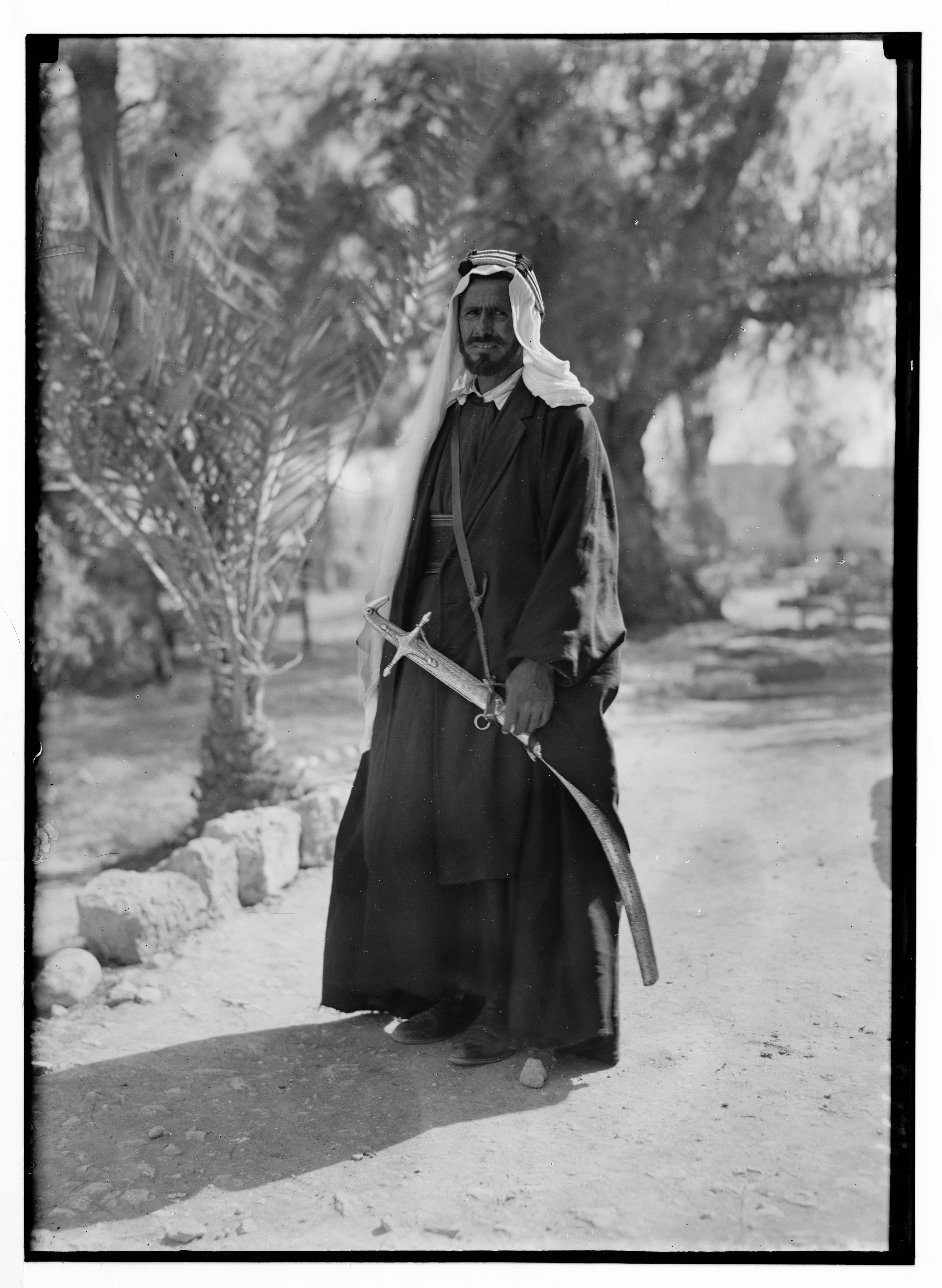
What Is a Palestinian Bisht?
A Palestinian bisht is an outer cloak, cut wide and worn open, draped over the shoulders rather than fastened shut. It goes on last, over the qumbaz or the robe, and it is the layer that tells a stranger something about the man wearing it before he has spoken.
The word itself travelled before the garment did. One account traces bisht to the Akkadian bishtu, meaning nobility; another traces it to the Persian pusht, meaning the back, after the way it sits across the shoulders. Both readings point at the same thing, which is that this was never only a coat.
In Palestine the term used most often was not bisht but abayeh, and the distinction matters more than it looks. The bisht of the Gulf record is a formal piece, thin, finely woven, reserved for occasions. The Palestinian abayeh started as working cloth.
The Abayeh: What Palestine Called Its Cloak
The Palestinian Heritage Foundation describes the garment plainly. Over the thob and the qumbaz, men wore an overcoat made of coarse handwoven wool that protected the wearer against rain and cold. That is the base case, and it is a weather garment before it is anything else.
Above that base sat a graded scale. The better examples were made of fine wool in black, brown or cream, embroidered around the neck in gold or silver thread. The difference between the two was not decoration for its own sake. It was legible, and everyone in the village could read it.
The colour record is specific. In the nineteenth century abayehs were made from blue and white striped wool, and later from brown and white. A striped cloak on a Palestinian man in an 1880s photograph is not a stylistic accident; it is the period showing itself.

Where the Wool Came From
A cloak of homespun wool has to begin with sheep, and in Palestine that means the southern hills. Sheep herding in Hebron and the southern highlands supplied the wool for the country's textile industry, and it went into blankets, cloaks and rugs before anything else.
The cloth was then woven in named places. Woolen fabrics for everyday use were produced by weavers in Majdal, Bethlehem, Ramallah and Jerusalem, four towns that between them clothed most of the country. Majdal is the best known of the four today, though it is remembered for a cotton rather than a wool, in the tightly woven cloth that carries the town's name.
Among the Bedouin the work happened outside the workshop entirely. Women spun thread from sheep's wool, coloured it with natural dyes, and wove it on a ground loom, a set of beams staked flat to the earth rather than stood upright in a room. The same technique produced the black goat-hair tent, which means the cloak and the house it was worn into came off the same loom.
That is the fact worth holding onto. The abayeh was not bought in from a distant centre of manufacture. It was a local product from the first shearing to the last thread, which is precisely why so little of it was written down.
Who Wore the Abayeh, and When
Every man had one, and no two carried the same weight. The coarse version was ordinary, worn by farmers and shepherds through winter and rain across the hills. The fine version with the worked neckline was the property of men with standing: the mukhtar of a village, the sheikh of a clan, the notables who did the negotiating.
The cloak did the announcing at every gathering that mattered. Weddings, funerals, reconciliation sittings, feast days, the arrival of guests who needed to be received properly. It is worn draped over the shoulders and held closed on the left, which leaves the right hand free for greeting, and that detail alone explains most of how the garment is carried in photographs.
None of that meaning survived the wardrobe intact. Men's dress across Palestine shifted to European clothing far earlier and far more completely than women's did, which is the reason the thobe is recognised worldwide today and the abayeh is not, and the reason so much of the men's half of Palestinian dress has to be reassembled from photographs.

The Gold Thread at the Neck
The one piece of ornament the abayeh carries sits where it will be seen first. Embroidery in gold or silver thread runs around the neck and down the front opening, and in the wider Arab tradition that metal-thread work is called zari.
Palestine had its own name and its own hand for it. The couching technique that lays a heavy metallic cord onto cloth and stitches it down is qasab, one of the stitches that sits alongside the fallahi cross-stitch and the tahriri outline in the working vocabulary of Palestinian needlework. The same skill that filled a woman's chest panel finished a man's collar.
This is the quiet argument the garment makes. Palestinian embroidery is usually discussed as something women wore, and the abayeh is the evidence that the craft dressed the whole village.
Why Is Palestine Not on the Bisht's UNESCO Listing?
At its session in December 2025 the committee inscribed the element Bisht (men's Abaa): skills and practices on UNESCO's Representative List of the Intangible Cultural Heritage of Humanity, as UN News reported at the time. The nomination was submitted jointly by nine states: Qatar, Bahrain, Iraq, Jordan, Kuwait, Oman, Saudi Arabia, Syria and the United Arab Emirates. Palestine did not join it.
The absence is not a judgement on whether the garment was Palestinian. Palestine took part in a different inscription in the same session, the zaffa, the bridal procession recognised across seven countries. A transnational file records the states that put their names to it, and nothing more.
What it does mean in practice is that the Palestinian version of the cloak, the striped homespun abayeh out of Hebron wool, has no line in the international register, while the Gulf and Levantine versions now do. Palestinian embroidery reached that list in 2021, on its own file. The cloak did not.
Recognition is not what keeps a garment alive, and it was never going to be. What keeps it alive is that somebody still knows the word, knows the wool came from the southern hills, and knows what the gold thread at the collar was saying.
Frequently Asked Questions
What is a Palestinian bisht?
An open wool cloak worn by men over the qumbaz or robe. In Palestine it was usually called an abayeh, and the everyday version was coarse handwoven wool worn against rain and cold rather than a garment kept for ceremonies.
What is the difference between a bisht and an abayeh?
They describe the same kind of garment under two names. Bisht is the term dominant in the Gulf and Iraq, where it usually means a fine, formal cloak. Abayeh is the term used in Palestine, and it covered the whole range, from working wool up to a fine cloak with gold thread at the neck.
What was the Palestinian abayeh made of?
Handwoven wool. The coarse version was heavy homespun; the better examples used fine wool in black, brown or cream. In the nineteenth century the cloth was striped blue and white, and later brown and white.
Is the bisht recognised by UNESCO as Palestinian heritage?
No. The bisht was inscribed on UNESCO's Representative List in December 2025 by nine Arab states, and Palestine was not one of them. Palestinian embroidery was inscribed separately in 2021.
The Cloak Nobody Wrote Down
The abayeh is missing from most accounts of Palestinian dress for a simple reason: it was ordinary. Nobody photographs the coat every man owns, and nobody catalogues a thing while it is still in daily use.
What is left of the Palestinian bisht is a scatter of lines in ethnographic notes, a colour scheme, four weaving towns, a herd of sheep in the Hebron hills, and a few hundred archive negatives of men standing in cloaks whose names were never recorded. That is enough to rebuild the garment on paper, and it is worth doing before the last of it goes.
At FALASTIN, we aim to keep that heritage alive through our Palestinian clothing collection, where the motifs and the history behind them are the point rather than the decoration.
Wear Heritage. Preserve History.
100% of profits from FALASTIN are donated to the United Palestinian Appeal.